
A single separated joint, one crushed branch or a torn wrap usually calls for a targeted repair. Runs that leak at many joints, ducts sized for an older system, or brittle jackets across the whole attic point toward replacement.
Service category · Santa Ana, CA
Ductwork Repair and Replacement in Santa Ana, CA
Your system runs, yet one bedroom stays stuffy, a hallway grille rattles, or attic-hot air blows from a register on a cooling day. Ductwork repair and replacement for your Santa Ana home starts with telling a duct fault from an equipment fault, because the fix and the urgency differ. If a return grille sits inside a furnace closet and anyone at home feels headachy or dizzy, switch the system off, get everyone into fresh air and call the gas utility from outside.
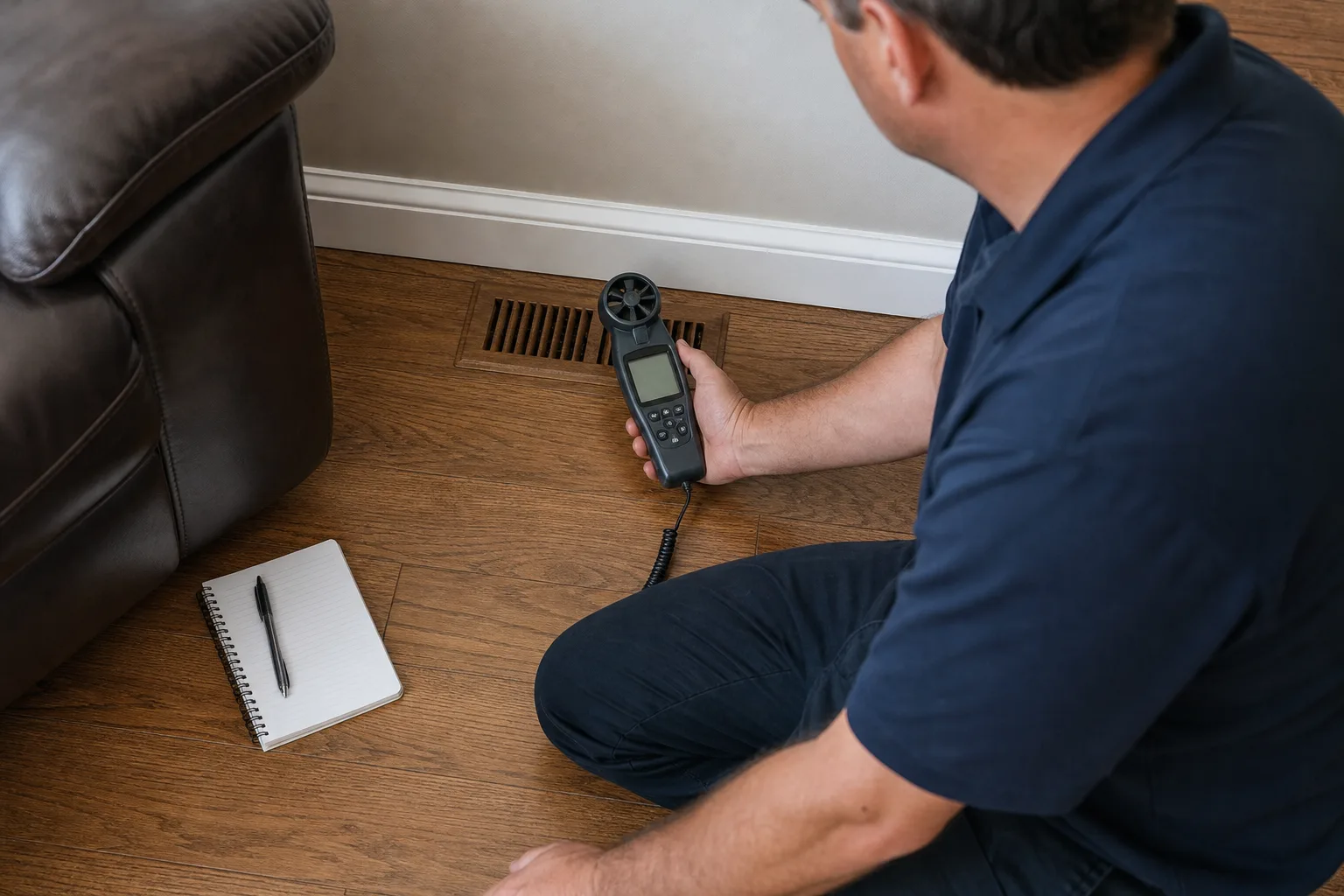
What you are seeing
Signs the trouble lives in the ducts
Duct faults leave a pattern you can read from the living space. Match what you notice to one of these groups before you pick up the phone.
- Uneven comfort
part of the house never matches the thermostat, day after day.
- Dusty smudges
dark marks along the edge of a hallway return, where air slips past a gap.
- Lukewarm supply
cooling air that arrives mild after a long trip through the roof space.
- New sounds
a boom as the blower starts or a whistle at one grille.
- Moisture
water spots on a ceiling below a duct run.
Choose your situation
Choose the situation that matches yours
- Leaking or Disconnected DuctsA boot, collar or plenum seam has let go: spot the signs of a disconnected duct, keep conditioned air out of the attic, and call.
- Ductwork ReplacementPatch again or replace the runs? Weigh duct age, sizing and layout, protect yourself from old wrap, and call with your system details.
- Hot and Cold Rooms From Duct ProblemsRooms that never match the thermostat: read the balance pattern, log temperatures, check the return path, and call with the numbers.
- Duct Sealing and LeakageSeeping seams and failed tape: understand slow duct leakage, how mastic and UL 181 seals hold, what a leakage test measures, and call.
- Collapsed or Crushed DuctsPinched flex, snapped straps or a dented trunk: trace crushed and collapsed ducts to their cause, keep the attic clear, and call.
- Duct Insulation ProblemsSweating, dripping or lukewarm ducts: see how failed insulation and torn vapor jackets waste cooling and wet ceilings, and call with notes.
- Noisy DuctworkBooms, ticks, whistles or a roaring return: match each ductwork noise to its cause, decide what can wait, and call with a clear description.
If a carbon monoxide alarm sounds or anyone feels ill near the furnace, get outside and call; for anything else, log the rooms and grilles, then call.
(714) 386-7626Safety protocol
Return air near a gas furnace comes first
A return opening inside the closet or garage that holds a gas furnace can pull air away from the burners and draw flue gas back into your living space. That backdraft risk turns a comfort complaint into a safety call.
Carbon monoxide alarm: leave the house, prop the doors open behind you, and call emergency services from outside.
Headaches that ease outdoors: switch the system off at the thermostat and call before you run it again.
Soot or scorch marks at the draft hood: leave the system off and keep the closet door as you found it.
A return grille that a past owner added near the furnace: mention it on the call and have a technician examine the return layout.
Leave the furnace, its venting and every gas fitting alone. Layout corrections near combustion equipment belong to trained hands.
How it works
How a duct system loses the air your equipment makes
Your blower pushes conditioned air out through trunk and branch runs and draws it back through the return. Any weak point along that loop lets the air escape, stall or absorb attic heat.
- Leaks and separations
conditioned air ends up in the attic or crawlspace instead of your rooms.
- Restriction
a pinched run or an undersized branch chokes the flow to one room.
- Heat gain
thin or torn wrap lets roof-space heat soak into cold supply air.
- Pressure imbalance
too little return path pressurizes closed rooms, makes doors whistle and strains the blower.
Technique
What you can note before the call
Room log
Write down which rooms miss the setting, by how much, and at what time of day.
Grille check
Hold your palm at each supply and return grille and note the weak, warm or noisy ones.
Visible runs
Look over any duct you can see in a utility room for sagging sections or wet spots, hands off.
Filter and returns
Confirm the filter sits in its slot and no furniture blocks a return.
Stay out of the attic: fragile jackets, exposed wiring and unfloored ceilings make it a technician's space.
Triage order
Repair one section or replace the runs
Ask which runs fail and why, so you can weigh a section repair against a full replacement with the facts in hand.
Phase order
What a duct fault does while it waits
Leaking runs stretch every cycle, which adds wear to the blower and compressor. Soggy wrap stains ceilings, and a return problem near a furnace stays a safety risk every time the burners light.
Calling while the fault involves one joint or one branch keeps the repair contained and leaves the choice of timing in your hands.
Local detail
Attic and garage duct layouts in Santa Ana
If your Santa Ana home routes supply runs through the attic or along a garage ceiling, those runs take the most heat and the most knocks. Tell the technician where your equipment sits in your Orange County home and which rooms sit farthest from it.
Scope: Residential heating, cooling and ductwork diagnostics, repairs, tune-ups and replacement. Scope and pricing are provided directly by the contractor you hire.
Service area
Santa Ana ZIP codes
- 92701
- 92703
- 92704
- 92705
- 92706
- 92707
Every responding technician is independent. Before work begins, confirm the technician's license, insurance and pricing with them directly.
Common questions
Ductwork repair and replacement questions from Santa Ana
Can duct problems make a new system seem too small?
Yes. A new air conditioner or furnace tied to leaking or narrow runs can miss the setting on hot or cold days. Mention the age of the ducts when you call, not only the age of the equipment.
Should you patch a leaking duct joint yourself?
Hold off. A homemade patch often hides the fault without fixing it. Note what you saw and where.
Can a duct fault harm the equipment itself?
Over time, yes. A starved blower motor runs hot, and thin airflow across the indoor coil can ice it in summer. Describe the room symptoms and any equipment sounds together.
A heating or cooling fault rarely fixes itself.
Call and describe the problem in Santa Ana: what the system is doing, what it did first and how old the equipment is.