
Carbon monoxide has no smell or color, and exposure builds with every cycle the furnace runs in a closed house. People asleep feel the symptoms last, which is why an alarm matters more at night.
Service · Santa Ana, CA
Gas Furnace Safety Signs in Santa Ana, CA
A gas furnace gives warning signs before it turns dangerous: a yellow, wavering flame, soot near the cabinet, a pilot that keeps going out, or a carbon monoxide alarm that sounds at night. Knowing those gas furnace safety signs lets you act before the problem reaches the air your family breathes in Santa Ana. If an alarm sounds or anyone feels dizzy, sick or drowsy, get everyone outside now and call 911.
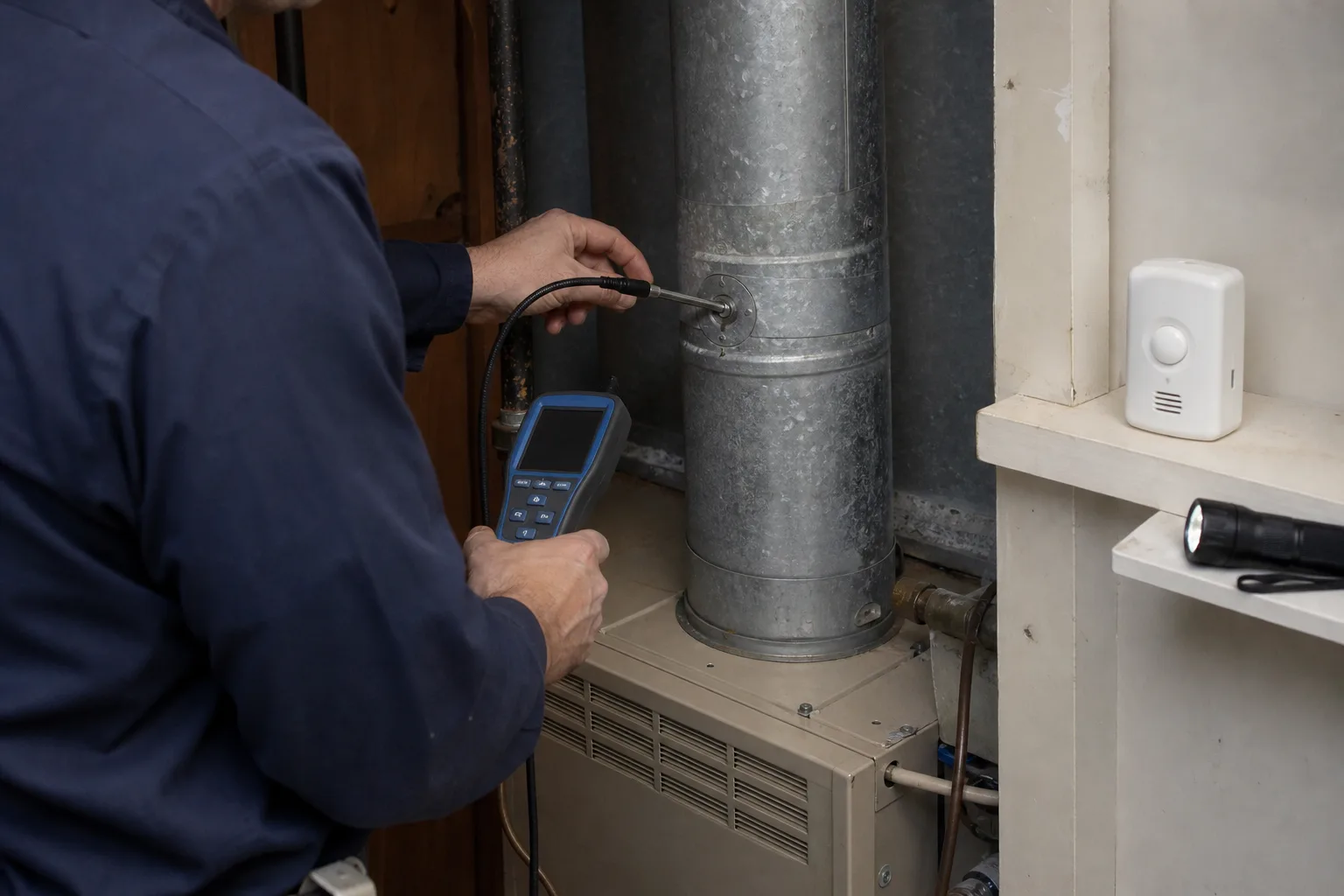
What you are seeing
Warning signs you can see and feel
- Yellow or orange flame
a healthy gas burner flame is mostly blue; a lazy yellow flame means incomplete combustion.
- Flame that jumps when the blower starts
a flame that leans, flickers or rolls once air begins moving can point to a crack in the heat exchanger.
- Soot or scorching
black streaks around the burner window, the vent connector or the top of the cabinet.
- Pilot outages
on an older furnace, a standing pilot that keeps going out.
- Health signs
headaches, nausea or tiredness that several people share at home and that ease outdoors.
If you see a yellow flame, soot or scorch marks, switch the furnace off and call; if an alarm sounds, get outside and call 911 first.
(714) 386-7626How it works
How combustion goes wrong
A furnace burns gas in a sealed path: flame inside the heat exchanger, exhaust pulled out through the vent by the inducer fan, and house air warmed on the other side of the metal. Carbon monoxide becomes a danger when that flame burns dirty or when exhaust escapes the path.
- Cracked heat exchanger
repeated heating and cooling opens a gap between exhaust and your air.
- Blocked or disconnected vent
a nest, debris or a separated joint sends exhaust back into the house.
- Starved burners
too little combustion air turns the flame yellow and raises carbon monoxide output.
- Stuck safety switch
a rollout or pressure switch that fails lets the burners fire when they should not.
Safety protocol
What to do the moment you notice a sign
Carbon monoxide alarm or symptoms: leave with everyone and every pet, call 911 from outside, and wait for clearance before going back in.
Rotten-egg smell: leave without touching light switches or the thermostat, and call your gas utility or 911 from outside.
Yellow flame, soot or scorching without an alarm: set the thermostat to off, switch off the furnace power, open a window and call.
Pilot that keeps going out: leave it out and call; do not try to light it again.
Never turn the gas valve, open the burner compartment or tape over a vent joint. Each of those hides the evidence a technician needs and can put you next to leaking gas or exhaust.
Technique
Keep your carbon monoxide alarms doing their job
Place alarms
Keep a working carbon monoxide alarm on every sleeping level and one near the furnace area.
Test them
Press the test button every month and replace batteries on the schedule the label gives.
Check the date
Replace any alarm past the end-of-life date printed on its back.
Keep the vent exit clear
Outside, keep leaves, plants and stored items away from where the furnace vent leaves the house.
Watch the flame
Glance at the burner flame through the sight window now and then, and note its color and whether it moves when the blower starts.
Local detail
Closed-up houses on cold Santa Ana nights
On the colder nights of an Orange County winter, Santa Ana homes stay shut with the furnace running, which is when a venting fault does the most harm. Test your carbon monoxide alarm before the first heating cycle of the season and mention any past alarm events on the call.
Phase order
Why a warning sign should not wait
A small crack or a slipped vent joint tends to grow worse with each heating cycle, and the damage often hides behind panels you should not open. Call while the sign is small, and keep the furnace off until a technician has tested it.
Scope: Residential heating, cooling and ductwork diagnostics, repairs, tune-ups and replacement. Scope and pricing are provided directly by the contractor you hire.
Service area
Santa Ana ZIP codes
- 92701
- 92703
- 92704
- 92705
- 92706
- 92707
Every responding technician is independent. Before work begins, confirm the technician's license, insurance and pricing with them directly.
Common questions
Gas furnace safety questions
What color should a gas furnace flame be?
Mostly blue, with a steady shape. A yellow, orange or lazy flame points to incomplete combustion, so switch the furnace off and call.
Can a cracked heat exchanger leak carbon monoxide?
Yes. A crack can let exhaust mix with the air the blower sends through your home. A working alarm is your best warning, and a technician confirms the crack with the burners firing.
Should you turn off the gas at the meter yourself?
Leave the meter and the furnace gas valve to your gas utility or emergency responders. Your job is to get out and call from a safe distance.
A heating or cooling fault rarely fixes itself.
Call and describe the problem in Santa Ana: what the system is doing, what it did first and how old the equipment is.