
Your AC hums but the vents push warm air, the furnace ticks and never lights, or one bedroom stays muggy wherever you set the thermostat. When your HVAC equipment fails in Santa Ana, the repair discussion goes better when you can describe the fault in plain language, and you are the person standing next to it.
Santa Ana · Orange County
HVAC / AC Repair in Santa Ana, CA
Getting your HVAC or AC repair right starts with the symptom: a system that runs but does not heat or cool is usually telling you where the fault is. Call and describe what it is doing, what it did before it stopped and how old the equipment is.
- No obligation to hire
- Furnace, AC and duct questions welcome
- Safety steps before any repair
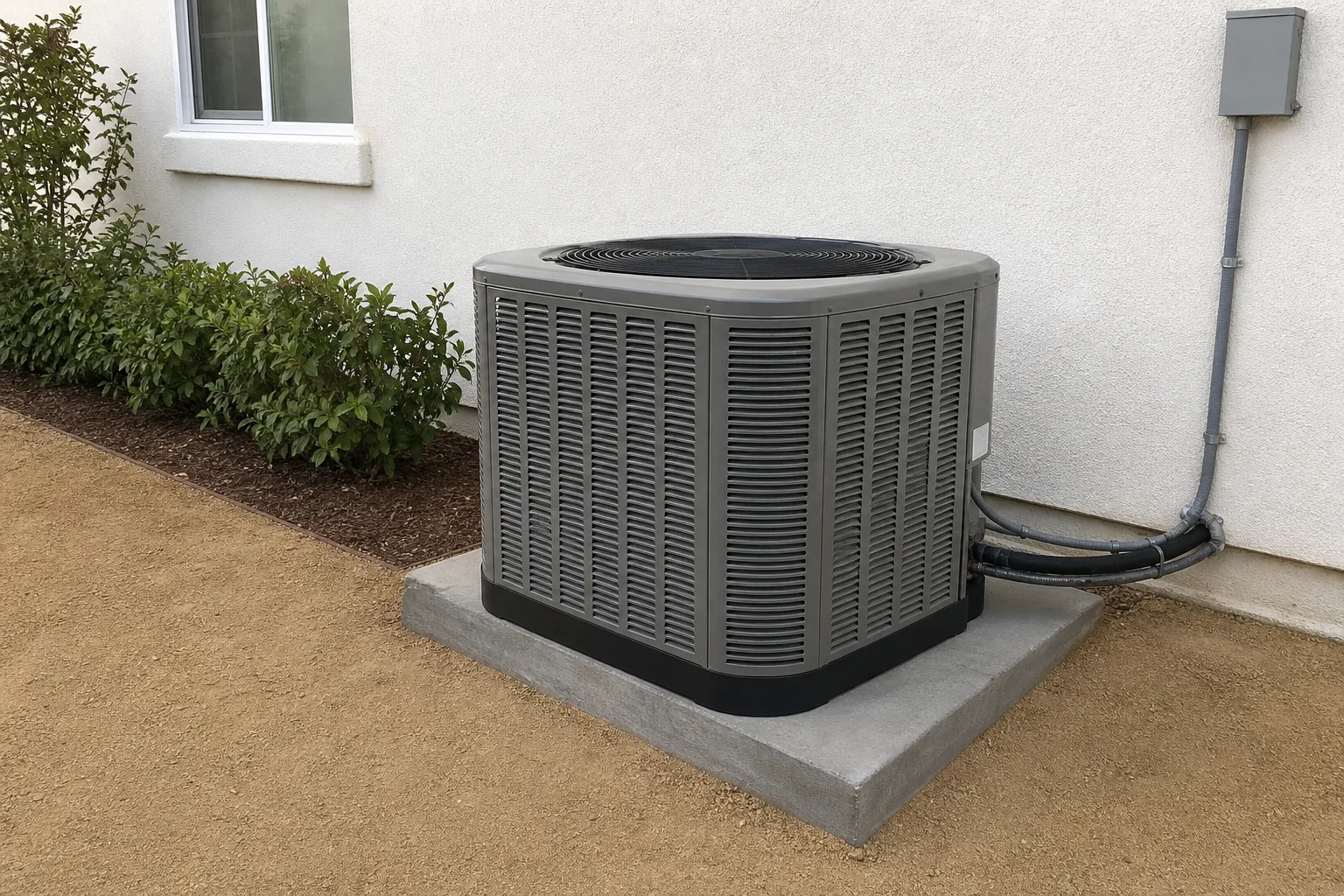
Diagnostics & symptoms
Pick the symptom, get the next step
Most heating and cooling trouble in a Santa Ana home starts with one of these five symptoms. Check the first cause named under yours before you call.
The air conditioner runs but the air is warm
Start with the filter and the thermostat. If both are fine, a dirty coil, low refrigerant or a failed outdoor fan or compressor is the usual cause.
AC not coolingThe furnace runs but the house stays cold, or it will not light
A failed igniter, a flame sensor covered in residue or a tripped safety switch stops the burner. If you smell gas, leave and call the gas utility.
Furnace not heatingThe heat pump blows cool air or ices over
A heat pump defrosts itself on a schedule. When the outdoor unit stays iced or the air stays cool, the defrost control or the reversing valve is the place to look.
Heat pump not heating or coolingIt starts and stops every few minutes
Short cycling usually points to restricted airflow, a faulty thermostat or a system that overheats and shuts itself down.
Short cyclingSome rooms never get comfortable
Uneven rooms often come from the ducts rather than the equipment: a disconnected run, a crushed section or leaks in the attic.
Hot and cold rooms from duct problems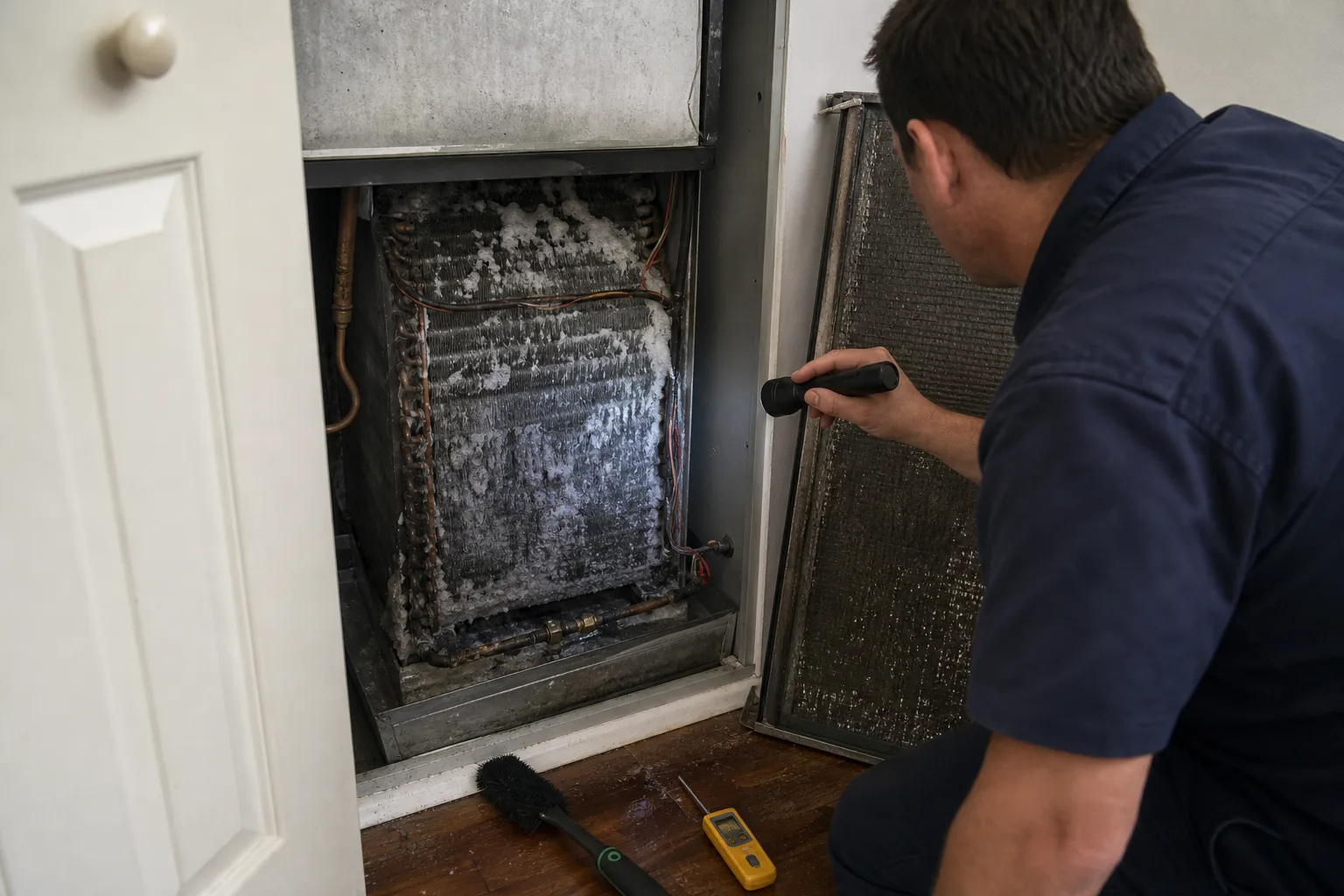
Diagnostics
A diagnosis starts with a reading, not a guess
Temperature split, motor amperage, capacitor values and static pressure show where a system is losing capacity. Those readings come before any part is replaced, so the repair matches the fault.
- Cooling: the temperature split across the coil and the condenser current.
- Heating: the flame signal, the temperature rise and the flue gases.
- Airflow: static pressure and the air each register delivers.
How diagnosis works
How an HVAC repair works, stage by stage
Every system and every fault is different, but a repair usually moves through the same four stages, in this order.
-
1
Describe the symptom
What the system does, what it did first and how old it is narrows the cause before anyone opens a panel. Gas smells and carbon monoxide alarms skip this stage: leave the building and call the right emergency number.
-
2
Diagnose with measurements
Gauges, a multimeter and temperature readings show which side of the system has failed. A diagnosis based on measurements replaces guessing at parts.
-
3
Repair or replace the failed part
Many faults are a single part: a capacitor, igniter, contactor or motor. When the repair cost approaches the cost of newer equipment, replacing the system becomes the practical question.
-
4
Verify the result
A finished repair is checked by running the system and measuring again: temperature drop or rise, airflow and electrical draw, not only whether it turns on.
Local standards
What shapes heating and cooling in Santa Ana
Post-war homes with attic ducts
Housing stockAttic ducts sit in the hottest part of the house on summer afternoons, so thin insulation or leaking seams cost cooling before the air reaches your rooms.
If your home is older and the equipment is being replaced, ask the technician to check the attic duct insulation and seams at the same visit.
Inland heat and Santa Ana winds
Climate and heatRapid humidity swings and airborne dust during offshore wind conditions heavily load air filters and stress condenser fan motors.
Check air filter loading frequently during dry wind events and ensure outdoor unit perimeter clearance is maintained.
I-5, I-405, SR-55 and SR-22
Main routes · across Orange CountyCongestion or a closure on one of them lengthens the route to a property, so the nearest cross street and exit matter more than the street address alone.
Give the nearest cross street or freeway exit when you call.
Why call
Why the first call matters in Santa Ana
A heating or cooling fault rarely stays the same size. The sooner you can describe what your system is doing, the sooner the right next step is clear.
- Professional HVAC work typically starts with measurements and follows the equipment manufacturer's specifications and the local mechanical code.
- Climate, the age of the equipment and how the ducts run through the building all shape how your system is loaded, so say how old it is and where the ducts run.
- Calls come from across Santa Ana and Orange County: give your ZIP code and nearest cross street when you call.
1
The right kind of help
Cooling, heating, heat pumps, ducts and maintenance each call for different diagnosis and different parts.
2
Local conditions
Heating and cooling load in Orange County depends on local climate and the way homes are built, and a technician weighs both on site.
3
What to have ready
What the system is doing, what it did first and how old it is. That is enough to start the call.
What you are seeing
Start with what your system is doing today
Take one unhurried walk around the house before you handle anything. Is the thermostat screen lit? Does air flow at the nearest grille? Is the outdoor fan turning? Those three answers sort almost any household problem into cooling, heating, airflow or electrical trouble. Then decide whether the equipment should keep operating, because a straining motor or an iced coil harms more of the system with every restart.
If your system is blowing warm air, cycling on and off or giving off a hot electrical smell, set the thermostat to off and call to describe what you see in your Santa Ana home.
(714) 386-7626Safety protocol
Hazards ahead of comfort
A few symptoms involve fire, shock or gas rather than indoor comfort. Count them as stop signs and look after people before equipment.
- Rotten-egg or gas odor
Get everyone outside, leave light switches untouched, and phone the gas utility from the street.
- Carbon monoxide alarm
Leave the house with everyone, pets included, and call emergency services from outdoors.
- Crackling or a scorched smell
Set the thermostat to off and shut the breaker, if you can get to it safely.
- Water pooling beside wiring
Kill power to the indoor equipment and keep children back.
Keep every access panel closed and the gas valve untouched. Your role is done once the power is off, people are safe, and the phone call is made.
How it works
How one weak part drags down its neighbors
Heating and cooling equipment operates as a relay: the thermostat asks, a contactor or control board responds, a motor or burner starts, and air ferries the result through your ducts. Lose one handoff and the parts beside it labor to compensate.
A capacitor that has weakened makes the compressor or blower struggle at every start. Heat builds inside the motor, its insulation degrades, and what began as a modest repair becomes a motor or compressor failure.
Airflow faults spread the same way. A neglected filter or a collapsed duct starves the indoor coil, ice grows across it, and the meltwater spills from the condensate tray beneath.
What you are seeing
Cooling trouble: warm air, ice and rapid cycling
Across Orange County homes, a cooling fault typically announces itself as an air conditioner that keeps going but stops cooling. The condenser may hum while its fan sits idle, the thicker suction tubing may sweat or ice over, or the compressor may start and quit again and again.
Ice on any tubing tells you to set the system to off and let it melt on its own. Never chip at the ice or open the sealed loop: locating and sealing a leak takes specialized equipment.
An abrupt stop, especially after a blackout, usually points toward a capacitor or contactor. A gradual decline over many weeks more often traces to a leak or a matted coil.
What you are seeing
Heating trouble: a cold furnace or a flame that drops out
When your furnace runs but the rooms stay cold, the order of the sounds you hear tells the story. A blower with no warmth behind it, burners that light and die moments later, or a quiet cabinet with a dark screen each implicate a distinct part.
A flame that drops out often traces to a flame sensor or a venting fault, and the furnace responds by closing its own gas valve. That shutdown is a safety control doing what it was built for, so restarting over and over only replays the failure.
If you smell gas or see scorch marks, keep the furnace off. Otherwise, nudge the setting up a few degrees, listen through one ignition try, and jot down each sound as it comes.
Property type
Heat pumps and the ducts you never see
A heat pump heats and cools with the same outdoor unit, so one fault can take out both seasons. Watch for cool air in heating mode, a defrost cycle that never ends, or a system that never satisfies your setting.
Your ducts deliver every bit of that air, and they fail out of sight. A ripped, flattened or detached run in the attic dumps conditioned air where nobody lives, so one room bakes or chills while the equipment looks normal.
Hold a tissue at each grille and compare how strongly it flutters from room to room. A feeble grille, a hiss at a seam, or dust streaking beside a vent reveals where the air escapes.
Phase order
What waiting does to each kind of fault
Some problems remain stable for a while; the rest compound with every cycle.
- Electrical faults
A failing capacitor can burn out the motor it serves after hard start upon hard start.
- Iced coils
Ice keeps spreading, and the thaw can drip through drywall below the air handler.
- Slow leaks
Pressure keeps dropping until the compressor runs hot.
- Flame shutdowns
Each failed ignition wears the igniter and taxes the electronics.
- Duct gaps
Openings draw attic air, humidity and dust into your rooms.
Calling promptly is important because a technician who sees the original fault diagnoses one problem, not the string of failures it set off.
Triage order
Seasonal tune-up or a repair call
Not every concern is urgent. Equipment that still heats and cools normally but sounds louder, smells dusty on its first run of the year, or has skipped service for years suits a maintenance visit before the hot or cool months.
Ask for repair instead when anything trips a breaker, leaks water, ices up, cycles on and off, or stops heating or cooling. Maintenance keeps healthy equipment healthy; it never substitutes for mending a system that has already failed.
Documentation
Details that make the call useful
Before you dial, photograph the thermostat screen and the label on each unit, and jot down when the first symptom appeared.
Add anything you already tried, such as a breaker reset or a new filter, and where the indoor equipment sits: attic, garage, closet or side yard. Those details turn a vague report into a clear starting point.
Triage order
Repair or replacement: questions worth asking
Most calls end with one part swapped: a capacitor, contactor, blower motor, igniter or a resealed duct joint. Replacement comes up when a compressor fails, a heat exchanger cracks, ductwork has deteriorated throughout the attic, or the same system keeps failing.
If whole system replacement or ductwork replacement is on the table, ask what failed, whether that part can be repaired, and how the new equipment or ducts are sized for your Santa Ana home.
Ask who handles any permit, and get the complete plan of work in writing before you agree. The choice stays yours. Compare the answers with the age of your equipment and its track record, and decide at your own pace.
Local housing
How Santa Ana buildings are heated and cooled
Post-war homes with attic ducts
Housing stockMuch of Santa Ana's housing went up in the post-war decades on slab foundations, with the furnace or air handler in a hall closet, garage or attic and the supply ducts running through the attic.
Attic ducts sit in the hottest part of the house on summer afternoons, so thin insulation or leaking seams cost cooling before the air reaches your rooms.
If your home is older and the equipment is being replaced, ask the technician to check the attic duct insulation and seams at the same visit.
Climate & heat
Heat, air quality and weather around Santa Ana
Inland heat and Santa Ana winds
Climate and heatSanta Ana experiences warm inland summer afternoon temperatures and dry seasonal offshore Santa Ana wind events that sharply drop outdoor relative humidity.
Rapid humidity swings and airborne dust during offshore wind conditions heavily load air filters and stress condenser fan motors.
Check air filter loading frequently during dry wind events and ensure outdoor unit perimeter clearance is maintained.
Service area
Serving Santa Ana & Orange County
Coverage
Covered ZIP codes (6): 92701, 92703, 92704, 92705, 92706, 92707
Questions
Santa Ana heating and cooling — FAQ
What should I check before calling about an HVAC problem in Santa Ana?
Check that the thermostat is set to the right mode and has working batteries, that the filter is not clogged and that the breaker has not tripped. Note what the system is doing, what it did first and how old it is, and describe that when you call.
What do I do if I smell gas or a carbon monoxide alarm sounds?
Leave the building. Call the gas utility from outside for a gas smell, or call 911 if a carbon monoxide alarm sounds or anyone feels unwell. Do not switch appliances or lights on or off on the way out.
Why does my air conditioner blow warm air or freeze over?
Restricted airflow from a dirty filter or coil is the most common cause of a frozen coil, and low refrigerant from a leak is another. Warm air with the fan running can also point to a failed outdoor fan, capacitor or compressor. Turn cooling off if you see ice, and call to describe it.
Should I repair or replace an older system?
It depends on the age of the equipment, the cost of the repair and how often it has failed. When a repair is large and the equipment is near the end of its life, replacing it becomes the practical question. Describe the system and its history when you call.
Which parts of Santa Ana and Orange County are served?
All of Santa Ana and the surrounding Orange County area. If you live near a city line, give your ZIP code and nearest cross street when you call.
Is there a cost to call?
A call costs nothing and does not commit you to hiring anyone. Any cost for a visit or a repair is something you would discuss directly with the contractor.
A heating or cooling fault rarely fixes itself.
Call and describe the problem in Santa Ana: what the system is doing, what it did first and how old the equipment is.