
A heating tune-up turns those quiet changes into numbers. The flame signal reads in microamps, the temperature rise compares supply air with return air, and the draft and inducer current confirm the vent works.
Service · Santa Ana, CA
Furnace Tune-Up in Santa Ana, CA
Your furnace sat idle through the warm months, and the first cold night is when a weak igniter or a coated flame sensor shows itself. A furnace tune-up checks the ignition sequence, the draft and the heat output of your Santa Ana system before you need it. If you smell gas at any point, leave the home and call the gas utility from outside.
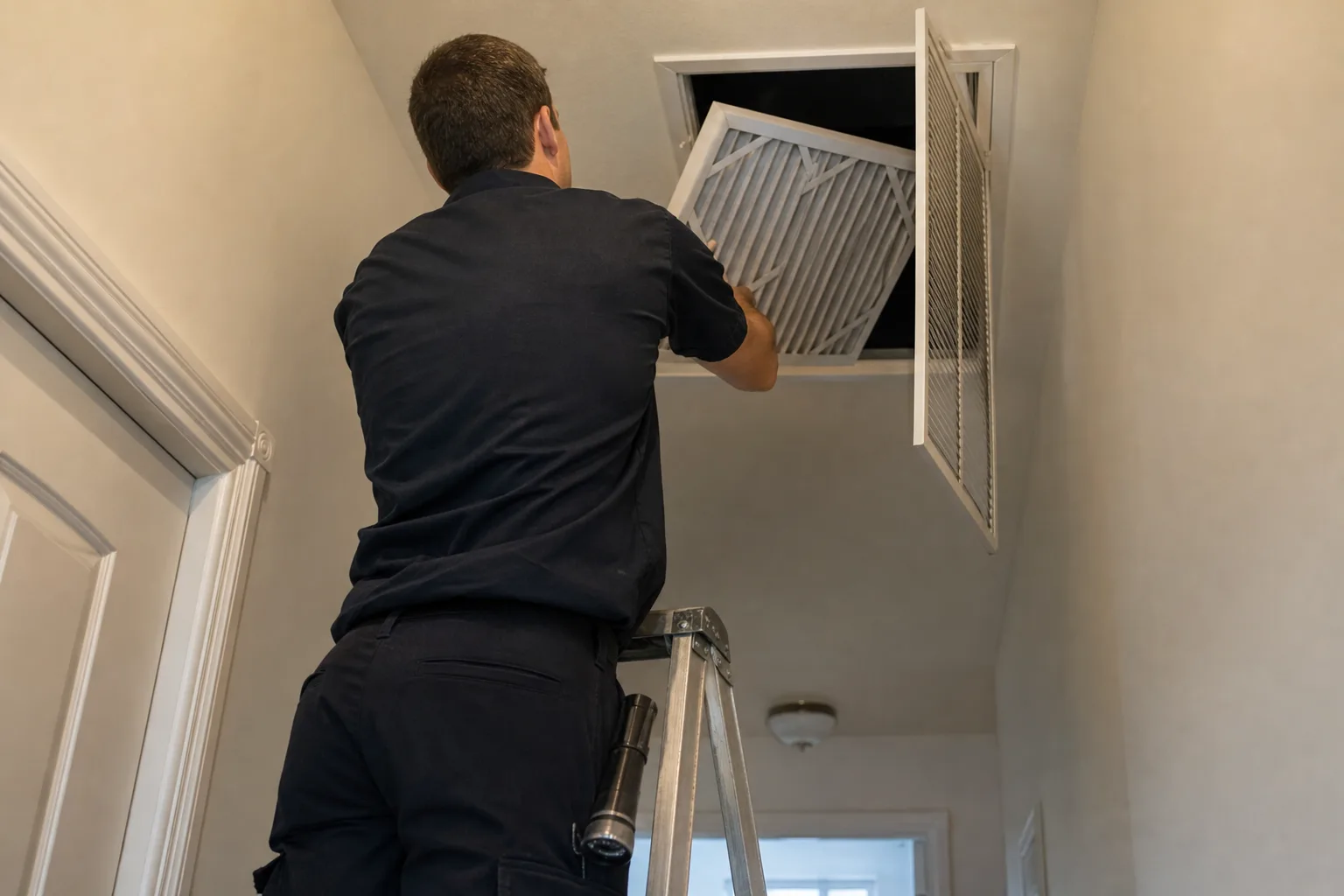
What you are seeing
Clues your furnace wants attention before winter
Your first heating starts of the season tell you more than the rest of the year combined.
- Several tries before it lights
the furnace clicks, starts and stops more than once before it settles.
- Rust or white crust
flakes on the closet floor, or streaks where the vent pipe leaves the cabinet.
- Lukewarm registers
the burners run, yet the air feels only mildly warm.
- A louder inducer
the small fan that starts first whines or rattles before ignition.
If the burners light with a boom, the CO alarm sounds or you smell gas, leave the furnace off and call; otherwise prep and book the tune-up.
(714) 386-7626How it works
What changes inside an idle furnace
Months of rest are hard on a furnace in quiet ways. Dust settles, metal oxidizes and small motors dry out while nothing runs.
- Igniter
the hot surface element grows brittle, and its resistance creeps up until it no longer glows hot enough.
- Flame signal
an oxide coating builds on the sensor rod, so the signal it sends the board drops toward the shutoff point.
- Draft
a bird nest, debris or a sagging vent section weakens the draft the inducer must prove before ignition.
- Temperature rise
a dirty blower or a restricted filter pushes the rise across the heat exchanger past the range on the furnace label.
Triage order
What a furnace tune-up measures
Ask for those readings in writing. A flame signal that sits lower each fall, or a temperature rise creeping toward the top of its range, tells you a part needs attention before it stops the furnace.
Technique
What you can do before the furnace tune-up
Clear the closet
Move paint, solvents, laundry and boxes away from the furnace; it needs open air for combustion.
Fit fresh media
A new filter keeps the temperature rise in range and stops the limit switch from tripping.
Try an early test run
On a mild fall afternoon, raise the setting a few degrees and let the furnace finish a full cycle, so a failure shows up before you depend on it.
Press the CO alarm test
Press the test button on each CO alarm near sleeping areas.
Copy the label
Write down the model number and the temperature rise range printed on the furnace label.
Leave the burner compartment, gas valve, igniter and flame sensor alone. The gas side belongs to a trained technician, and a cracked igniter or a scratched sensor turns a tune-up into a repair.
Phase order
Why autumn timing matters
A furnace that rests for months meets its first cold night with every weakness at once: a brittle igniter, a dusty sensor and a draft nobody has tested since spring.
Fixing a weak igniter on a mild fall afternoon means one planned call. Waiting until it cracks on a cold night leaves your home without heat while you wait for the repair.
Local detail
Short heating seasons in Orange County
A Santa Ana furnace may run only on cool mornings and evenings, so it spends most of the year idle. That long rest makes an autumn trial firing worth the effort; jot down anything unusual before winter nights arrive.
Scope: Residential heating, cooling and ductwork diagnostics, repairs, tune-ups and replacement. Scope and pricing are provided directly by the contractor you hire.
Service area
Santa Ana ZIP codes
- 92701
- 92703
- 92704
- 92705
- 92706
- 92707
Every responding technician is independent. Before work begins, confirm the technician's license, insurance and pricing with them directly.
Common questions
Furnace tune-up questions
When should you book a furnace tune-up?
Early fall, before the first cold night, while any repair can wait for a convenient day. A heat pump that also heats your home benefits from the same fall timing.
What is temperature rise, and why does it matter?
It is the difference between the air entering the furnace and the air leaving it. A rise outside the range on the label points to an airflow or burner problem that strains the heat exchanger.
Does an older furnace still need a tune-up?
Yes, an older furnace benefits most, because heat exchanger cracks and worn inducer bearings grow more common with age. Read the age from the furnace label and mention it when you call.
A heating or cooling fault rarely fixes itself.
Call and describe the problem in Santa Ana: what the system is doing, what it did first and how old the equipment is.