
Most cooling equipment settles into a familiar hum and whoosh. A new sound that shows up at startup, during the run or at shutdown deserves attention, especially if it grows louder over a few days.
Service · Santa Ana, CA
AC Making Noises in Santa Ana, CA
Your AC is making noises it never made before: a buzz from the outdoor unit, a bang at startup, a squeal from the indoor cabinet, or a rattle that comes and goes. Each sound points to a different part, and some mean the equipment is grinding itself apart. Listen closely for a minute, note where the sound comes from, then decide whether to shut it off.
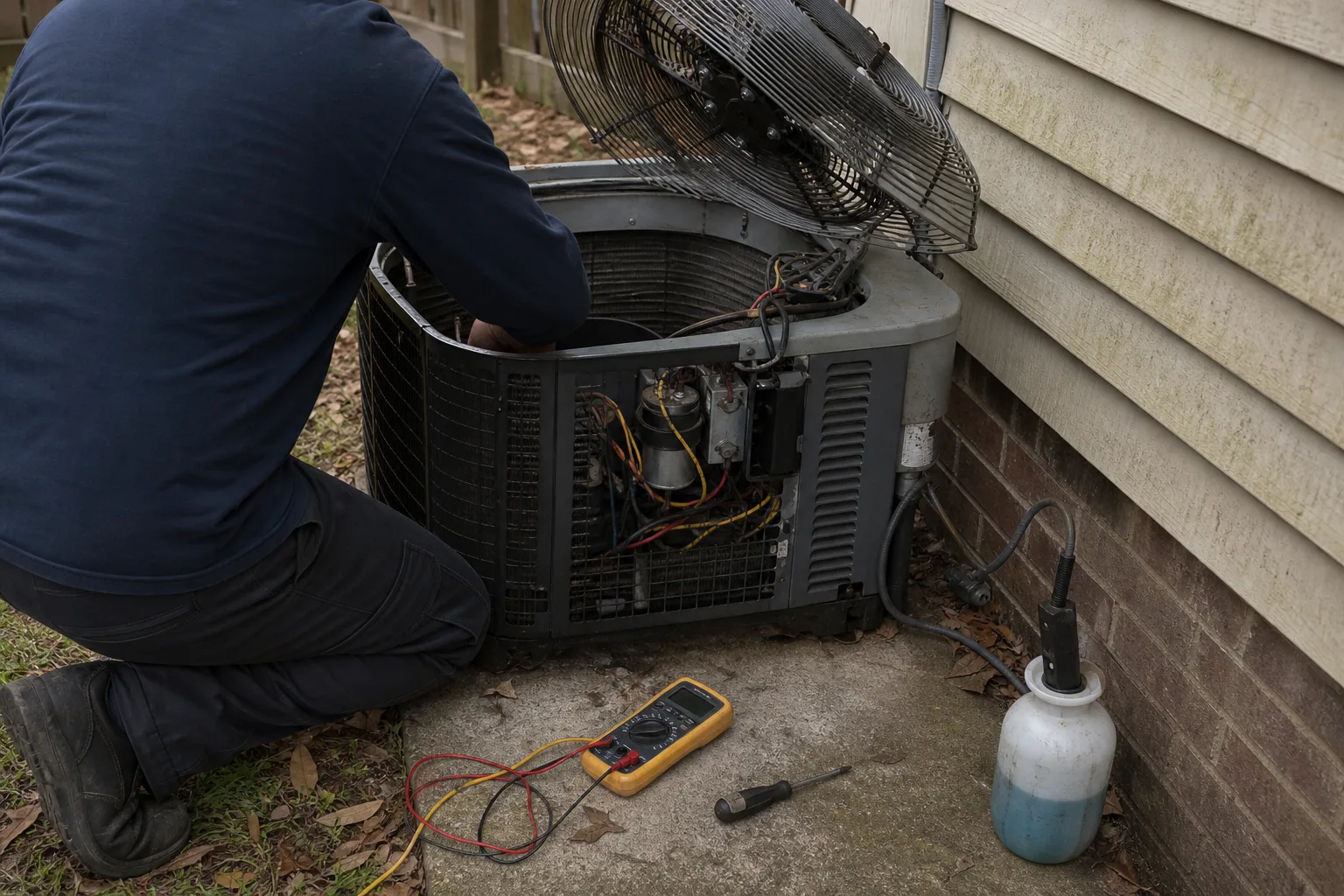
What you are seeing
Sounds that tell you something changed
Santa Ana households often catch it when a quiet evening makes the outdoor unit easy to hear. Write down the first time you noticed it and whether it has changed since.
If the sound is grinding, banging or a buzz with no fan movement, switch off and call with your recording ready.
(714) 386-7626How it works
Match the sound to the part
- Loud buzzing outdoors
a chattering contactor, a failing capacitor or a compressor straining to turn over.
- Banging or clanking
a loose or broken part inside the compressor, or a fan blade striking its guard.
- High-pitched squealing
a worn blower or fan motor bearing, or a slipping belt on older air handlers.
- Hissing or whistling
air squeezing through a gap around the cabinet, or refrigerant escaping from a leak.
- Rattling
loose panels, missing screws, twigs inside the condenser or a fan blade working loose.
- Rapid clicking
a relay or thermostat cycling over and over, sometimes with nothing starting.
- Gurgling
air moving through the condensate trap, or refrigerant flow that sounds uneven.
Technique
Pin down where and when it happens
Locate it
Stand by the outdoor unit, then by the indoor cabinet and a few registers, and note which spot sounds loudest.
Time it
Note whether the noise starts at startup, runs through the whole cycle, or comes at shutdown.
Record it
A short phone video with sound helps you describe it accurately on the call.
Clear the grille
Look for sticks, leaves or toys against the condenser grille, and lift away anything you can reach without opening the unit.
Never reach into the outdoor fan or open the cabinet to find the source. The blades can spin up without warning when the thermostat calls.
Safety protocol
Noises that mean shut it off now
- Grinding or screeching metal
a bearing or the compressor itself is failing.
- Banging that repeats
something loose keeps striking the fan or the compressor housing.
- Loud buzzing with no fan movement
the motor has stalled and keeps heating up.
- Any noise paired with a burning smell
electrical damage is under way.
For these, set the thermostat to off and switch off the AC breaker.
Local detail
Startup sounds after the cool months
If your Santa Ana system sat mostly idle through winter, the first long runs of spring expose worn bearings and loose hardware first. Mention whether the sound began with that first hard run, since many Orange County systems face their heaviest strain at that point.
Phase order
Why a new sound rarely fades on its own
Mechanical noises grow because wear feeds itself: a dry bearing heats up, loosens and wobbles more with every rotation. A loose fan blade can crack the motor shaft or punch a hole through the condenser coil.
Electrical buzzing follows a similar path. A pitted contactor heats with every cycle until it welds shut or fails open, and it often takes the capacitor or compressor down with it.
Scope: Residential heating, cooling and ductwork diagnostics, repairs, tune-ups and replacement. Scope and pricing are provided directly by the contractor you hire.
Service area
Santa Ana ZIP codes
- 92701
- 92703
- 92704
- 92705
- 92706
- 92707
Every responding technician is independent. Before work begins, confirm the technician's license, insurance and pricing with them directly.
Common questions
AC noise questions
Is it normal for an AC to hum?
A steady, low hum from the outdoor unit is normal. A loud buzz, a hum with the fan still, or a hum that grows louder over days points to an electrical part on its way out.
Why does the AC bang when it starts?
A single soft thump can come from the compressor starting. Loud or repeated banging suggests a loose part or a failing compressor, so switch your system off and call.
Can a hissing AC mean a refrigerant leak?
Yes. Hissing near the copper lines or coils can mean refrigerant is escaping. Switch the system off, keep away from the lines, and mention where you heard the hiss.
Why does the indoor unit squeal when the blower starts?
A worn blower motor bearing or, on older air handlers, a slipping belt squeals as the motor spins up. Shut your system off if the squeal turns to grinding, and note whether it fades once the blower reaches speed.
A heating or cooling fault rarely fixes itself.
Call and describe the problem in Santa Ana: what the system is doing, what it did first and how old the equipment is.